What Factors Affect Crossbite Correction After Jaw Growth?
Quick answer: Crossbite correction after jaw growth depends on whether the problem involves tooth position, jaw structure or both. The severity of the discrepancy, gum and bone support, existing dental work and overall oral health also influence treatment choices. Adults may benefit from orthodontic tooth movement, but significant skeletal differences can require more complex treatment.
The distinction between moving teeth and changing the underlying jaw relationship is central to treatment planning.
Orthodontic appliances apply controlled forces that gradually reposition teeth within their supporting bone. The biological process that permits tooth movement continues in adulthood, so age alone does not rule out braces or other orthodontic treatment.
Jaw growth is different. During childhood and adolescence, developing bones may respond to certain growth-guidance and expansion approaches. Once skeletal growth is complete, changing a substantial jaw-width or jaw-position discrepancy becomes more difficult.
For example, an adult whose upper back teeth tilt inward may need a different approach from someone whose upper jaw itself is substantially narrower than the lower jaw. Both situations can produce a similar-looking crossbite, but the underlying anatomy may require different treatment decisions.
There is no universal age at which every person’s jaw stops developing. Skeletal maturity varies, and chronological age alone cannot determine whether a particular expansion technique is appropriate.
Research supports certain expansion treatments for posterior crossbites in growing patients, but that evidence should not be interpreted as proof that the same methods work equally well for adults. A Cochrane review of posterior crossbite treatment found benefits from selected expansion appliances in children, while identifying limitations in the evidence for other comparisons.
For adults, the clinical question is not simply whether teeth can move. It is whether the intended movements can produce a functional result without placing excessive demands on the surrounding tissues.
Dental versus skeletal crossbite
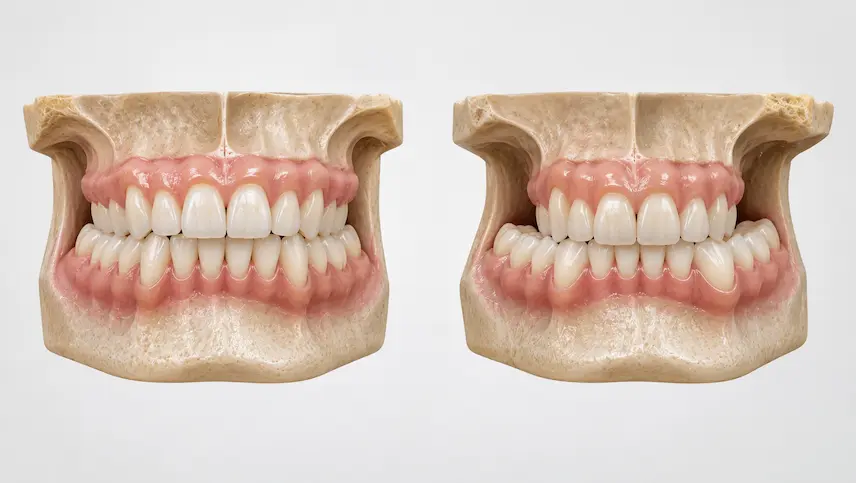
A dental crossbite primarily involves the position or inclination of individual teeth. A skeletal crossbite involves an underlying discrepancy in jaw width, position or relationship. Some patients have a combination of both.
| Assessment finding | Clinical significance | Potential treatment implication |
|---|---|---|
| Primarily dental crossbite | One or more teeth are positioned incorrectly relative to otherwise compatible jaw structures. | Orthodontic tooth movement may be considered. |
| Significant skeletal discrepancy | The upper and lower jaws differ substantially in width or position. | Specialist assessment may be needed to consider skeletal correction or alternatives. |
| Combined dental and skeletal discrepancy | Both tooth position and jaw structure contribute to the bite problem. | Treatment may require multiple approaches or carefully selected compromises. |
| Reduced periodontal support | Gum disease or loss of supporting bone may limit safe tooth movement. | Periodontal assessment and disease stabilization may be necessary before orthodontics. |
Why Do Gum Health and Bone Support Matter in Adult Treatment Planning?
Orthodontic movement relies on healthy supporting structures. The periodontal tissues include the gums, periodontal ligament and alveolar bone that help hold the teeth in place.
Adults may have a history of gum disease, gum recession, previous tooth loss or changes in bone support. These conditions are not present in every adult, but they must be assessed when planning tooth movement.
Periodontal disease and treatment readiness
Periodontitis is an inflammatory disease affecting the tissues that support the teeth. It can cause loss of attachment and supporting bone, sometimes without obvious discomfort.
Moving teeth when periodontal inflammation is uncontrolled may increase the risk of complications. If active periodontal disease is identified, treatment generally needs to address and stabilize the disease before orthodontic movement begins.
A history of periodontitis does not automatically exclude orthodontic care. Some adults with previously treated and stable periodontal disease can undergo carefully planned tooth movement, provided that adequate support, monitoring and hygiene are maintained.
Gum recession and the limits of tooth movement
Gum recession occurs when the gum margin moves away from its previous position, exposing more of the tooth or root surface.
In some crossbite cases, correction involves changing the inclination of teeth toward the cheeks or tongue. The amount and direction of movement must be assessed against the available supporting bone.
Moving teeth beyond favourable anatomical boundaries can contribute to periodontal complications in susceptible patients. The risk depends on factors such as existing gum and bone support, the direction and extent of tooth movement, and individual periodontal health. Careful assessment and monitoring are important when planning crossbite correction in adults.
This is why a clinician may recommend periodontal evaluation, additional diagnostic records or changes to the proposed treatment plan when gum support is a concern.
Can Braces Correct a Crossbite in Adults?
Quick answer: Braces can correct some adult crossbites by moving teeth into a healthier relationship. They may be suitable when the problem is primarily dental or when limited orthodontic compensation is clinically acceptable. Braces alone cannot reliably correct every substantial skeletal jaw discrepancy, so suitability depends on a detailed assessment.
Braces use brackets and wires to create controlled tooth movement. Depending on the problem, an orthodontic treatment plan may involve adjustments to tooth position, inclination, arch coordination and the way opposing teeth meet.
For a crossbite involving a limited number of teeth, controlled repositioning may be sufficient if adequate space and periodontal support are available.
When the problem involves several teeth or a broader discrepancy between the dental arches, treatment becomes more complex. The clinician must determine how much correction can be achieved without moving teeth into unfavourable positions.
In some adults, orthodontic compensation may improve the bite without fully changing the underlying jaw relationship. This approach has anatomical limitations and may not provide an appropriate result in every case.
Are clear aligners an alternative?
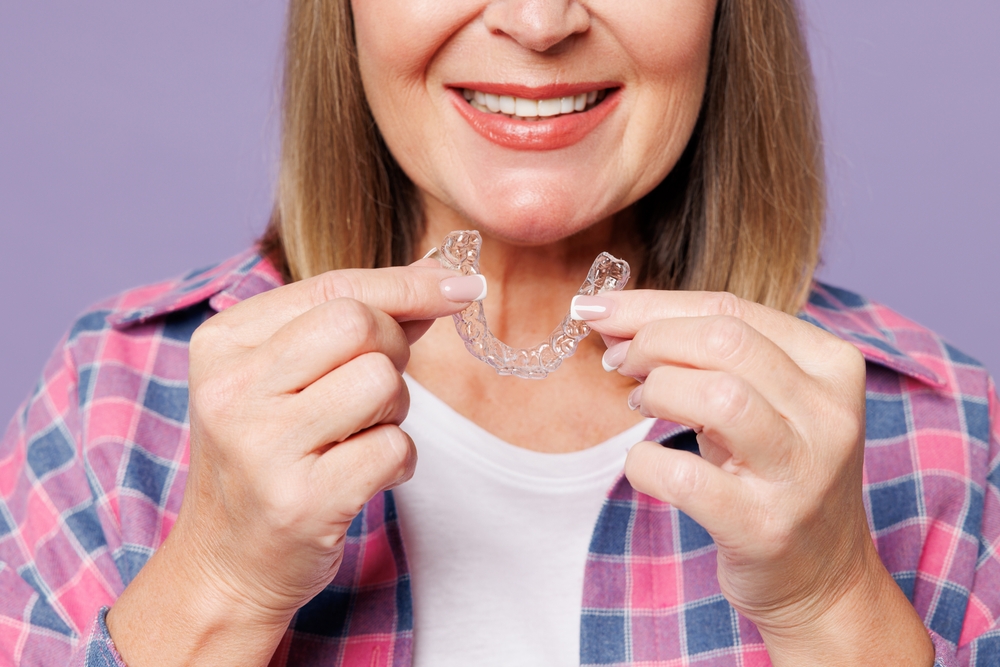
Clear aligners can be considered for selected adult crossbites, particularly when the required changes involve suitable tooth movements. However, their effectiveness depends on the specific movements, appliance design, patient adherence and treatment complexity.
Clear aligners should not be assumed to offer the same correction capabilities as fixed appliances for every crossbite.
Similarly, neither aligners nor conventional braces should be presented as a guaranteed substitute for skeletal treatment when the underlying jaw discrepancy is substantial.
When Might Adult Crossbite Treatment Require Jaw Expansion or Surgery?
Some adult crossbites involve a clinically significant difference in jaw width rather than tooth position alone. These cases may require assessment of approaches intended to address the skeletal discrepancy.
Adult maxillary expansion
The maxilla is the upper jaw. When it is too narrow relative to the lower jaw, the problem is called a transverse maxillary deficiency.
Specialized expansion techniques may be considered in selected adult patients. One approach studied in the orthodontic literature is miniscrew-assisted rapid palatal expansion, often abbreviated as MARPE. It uses skeletal anchorage to help transmit expansion forces.
A 2021 systematic review and meta-analysis reported promising expansion outcomes in late adolescents and adults, but also identified dental and periodontal side effects and very low certainty of evidence.
More recent research continues to investigate the effectiveness, safety and stability of these techniques. Eligibility depends on individual anatomy and specialist assessment. MARPE is not appropriate for every adult, and its mention here does not mean that Artis Dental Centre provides this procedure.
When jaw surgery may be considered
Orthognathic surgery is corrective surgery involving the jaw bones. In selected adults with substantial skeletal discrepancies, orthodontic treatment may be combined with surgical correction.
Whether surgery is appropriate depends on the severity of the discrepancy, the patient’s functional concerns, general health and treatment goals.
Surgery carries risks that differ from those associated with routine orthodontic movement, including swelling, pain, bleeding, infection, altered sensation and complications related to healing. Recovery and any required orthodontic treatment must be discussed individually with the appropriate specialists.
Not every adult with a skeletal crossbite needs surgery. Monitoring, limited orthodontic correction or other approaches may be appropriate depending on the clinical findings and the patient’s informed preferences.
Which Factors Determine Whether an Adult Is Eligible for Crossbite Correction?
Quick answer: Adult crossbite treatment eligibility depends on the cause and severity of the bite discrepancy, periodontal support, dental health, previous restorations and the movements required. Clinicians also consider medical history, treatment goals and whether the expected benefits justify the risks. Eligibility cannot be determined from photographs or symptoms alone.
A thorough assessment helps identify whether treatment is appropriate now, whether additional dental care is needed first or whether a specialist opinion would be beneficial.
Existing dental work and missing teeth
Adults may have crowns, bridges, implants or missing teeth that influence the treatment plan.
Natural teeth can move through orthodontic treatment when their supporting tissues allow it. Dental implants, however, are integrated with the surrounding bone and cannot be repositioned through conventional orthodontic forces.
Crowns and other restorations can also affect appliance attachment, tooth contacts or the final restorative plan. A patient who needs extensive restorative work may benefit from coordinated planning before permanent restorations are completed.
Medical history and oral health
Some medical conditions and medications can influence bone health, healing or the biological response to orthodontic forces. Clinicians should review relevant medical history rather than making assumptions based on age.
Untreated cavities, active gum disease or significant tooth mobility may need attention before orthodontic treatment is initiated.
Functional needs and realistic goals
The purpose of treatment may include improving how teeth meet, reducing problematic tooth contacts or addressing concerns about alignment. The relative importance of these goals differs between patients.
Some people seek correction mainly because their bite feels uncomfortable. Others notice unusual tooth wear or are concerned about changes in appearance.
Symptoms and goals help guide the assessment, but they do not independently establish the cause of the problem or guarantee that orthodontic treatment will resolve discomfort.
When Should an Adult Crossbite Be Assessed?
Quick answer: Adults should seek a dental assessment when their bite appears misaligned, chewing is difficult, teeth show unusual wear or the way their teeth meet is changing. A stable, symptom-free crossbite may not always require correction, but a clinician should evaluate its cause and potential effects before recommending treatment or monitoring.
A crossbite does not automatically mean that damage is occurring. However, certain changes make an examination particularly worthwhile:
- One or more teeth repeatedly meet in an uncomfortable or unusual position.
- Chewing feels difficult on one side of the mouth.
- A tooth shows chipping, increasing wear or sensitivity.
- The lower jaw appears to shift sideways when closing.
- The bite feels different from how it used to feel.
- Gum recession or tooth mobility is developing around affected teeth.
These findings can have causes other than a crossbite. For example, tooth wear may also be associated with grinding, while jaw discomfort can occur for several reasons. A clinical examination helps distinguish coincidental symptoms from problems related to the bite.
A sudden change in how the teeth meet, especially after an injury or alongside significant pain, swelling, loose teeth or difficulty closing the mouth, requires prompt professional assessment rather than a routine orthodontic consultation.
What Happens During an Adult Crossbite Assessment?
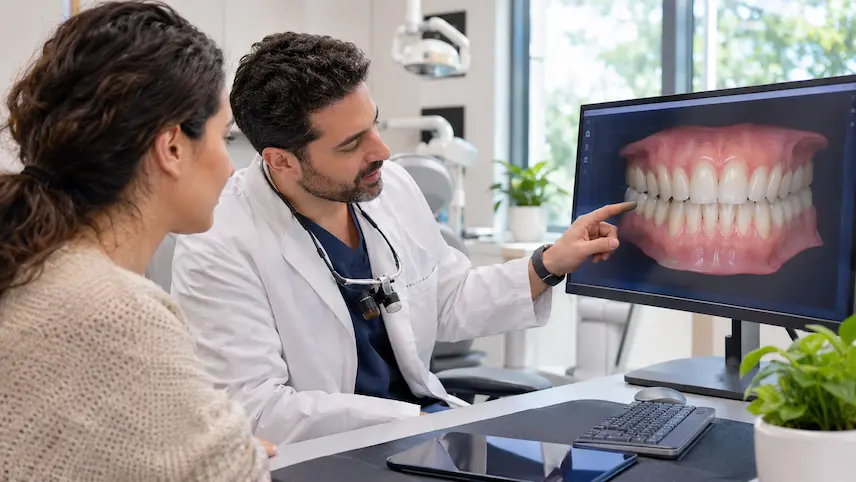
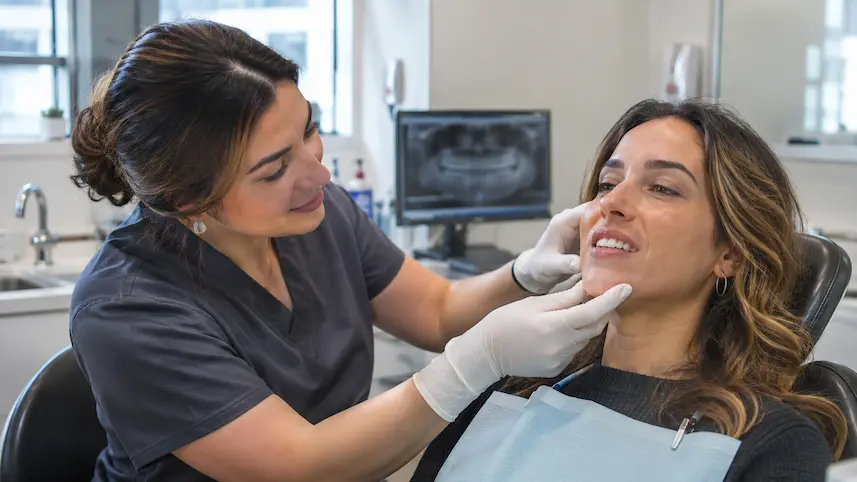
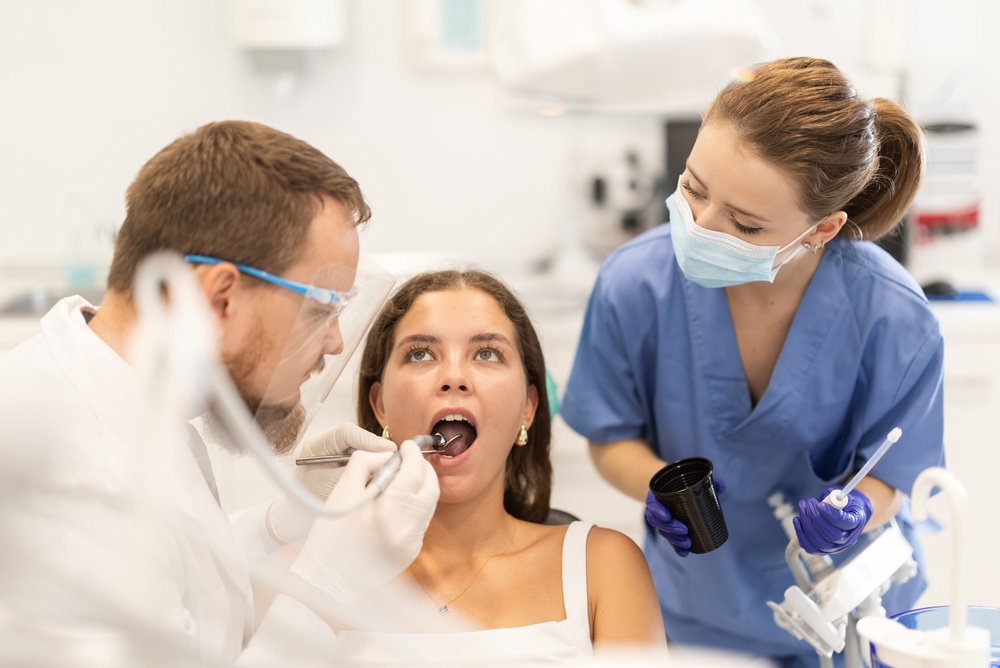
Assessing an adult crossbite involves understanding how the teeth, jaws and surrounding tissues function together. A clinician needs enough information to identify the underlying problem before considering treatment.
The evaluation may include several components:
- Medical and dental history: Reviewing previous orthodontic care, dental restorations, injuries, symptoms and relevant health conditions.
- Clinical bite examination: Identifying which teeth are in crossbite and observing how the upper and lower teeth contact.
- Jaw movement assessment: Checking whether the lower jaw shifts when the teeth close together.
- Periodontal evaluation: Examining gum health, tooth mobility, recession and supporting tissues.
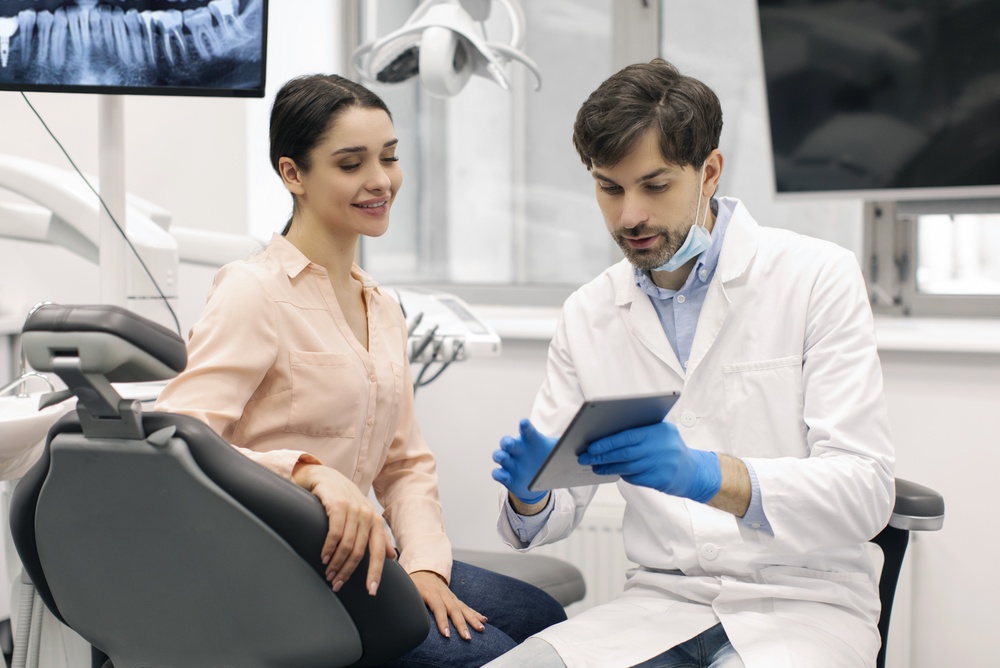
- Diagnostic records: Considering photographs, dental scans, models or appropriate radiographs when they would contribute to diagnosis or treatment planning.
- Treatment discussion: Reviewing potential benefits, limitations, alternatives and whether specialist assessment is appropriate.
Advanced imaging is not automatically necessary for every crossbite. The decision should be based on the clinical question, expected diagnostic benefit and appropriate radiation protection principles.
At the end of an assessment, the clinician may recommend treatment, further evaluation or periodic monitoring. Observation can be a reasonable option when the findings do not support an immediate need for correction.
What Should Adults Understand Before Starting Treatment?
Crossbite treatment is not simply a matter of selecting an appliance. Patients should understand what the treatment is intended to change and what anatomical limitations may remain.
Possible benefits and limitations
Appropriate orthodontic treatment may improve selected tooth contacts, alignment and chewing function. However, the achievable result depends on the diagnosis, and changing the position of teeth does not necessarily correct the underlying jaw relationship.
Not every symptom can be attributed to the crossbite. For example, treating a bite discrepancy should not be presented as a guaranteed solution for headaches or temporomandibular joint discomfort.
Risks and treatment maintenance
Orthodontic treatment may cause temporary soreness and can make cleaning more difficult around appliances. Other possible complications include enamel changes, gum problems and root resorption, which is shortening of a tooth root associated with biological changes during movement.
Individual risk varies with tooth movement, treatment duration, oral hygiene and existing dental conditions. Regular monitoring is important throughout care.
After active orthodontic treatment, retainers may be recommended to help maintain the corrected tooth positions. Without suitable retention, teeth can shift over time.
Patients considering treatment should ask what the proposed approach can realistically achieve, whether alternatives are available and how long-term stability will be managed.
Can an Adult Crossbite Get Worse Without Treatment?
Quick answer: Some adult crossbites remain relatively stable, while others are associated with progressive tooth wear, altered contacts or periodontal concerns. The appearance of a crossbite alone does not establish that it will worsen. A dental examination can identify current problems, assess individual risk and determine whether treatment or monitoring is appropriate.
Because adult jaw growth is largely complete, the natural progression of a crossbite differs from that of a developing bite in childhood.
Changes can still occur through tooth movement, tooth loss, periodontal disease, dental wear or restorative changes. These factors may alter how the teeth meet even when the underlying skeletal relationship remains similar.
For adults who do not need immediate correction, maintaining regular dental examinations helps monitor tooth contacts, gum health and any meaningful changes.
Understanding Your Adult Crossbite Treatment Options
Crossbite treatment for adults begins with identifying whether the concern is dental, skeletal or a combination of both. The same visible bite pattern can require different recommendations depending on jaw maturity, tooth support and overall oral health.
Artis Dental Centre provides orthodontic care in New Westminster. If you are concerned about your bite, you can request a dental appointment to discuss your concerns and whether further orthodontic assessment is appropriate.
This article is for general educational purposes and does not replace an examination, diagnosis or personalized treatment recommendation from a qualified dental professional.