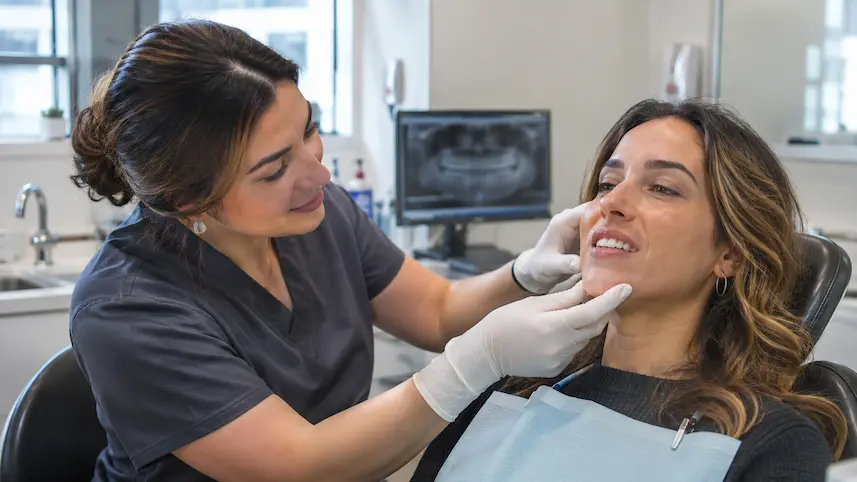
A crossbite is a type of bite misalignment in which one or more upper teeth sit in an abnormal position relative to the lower teeth when the mouth closes.
In a common crossbite pattern, an affected upper tooth sits behind or inside its corresponding lower tooth. A crossbite can involve the front teeth, back teeth, or several teeth on one or both sides of the mouth.
Some crossbites are easy to notice in the mirror. Others are subtle and may only become apparent during a dental examination. Understanding the difference matters because a crossbite can result from tooth position, jaw development, or a combination of both. These factors influence whether treatment is needed and which approach may be appropriate.
How Can You Tell a Crossbite From Other Bite Problems?
Quick answer: A crossbite occurs when certain upper teeth bite inside or behind the lower teeth instead of fitting in their usual position. Unlike an overbite, which describes vertical overlap, or an underbite, which generally involves a broader forward relationship of the lower teeth or jaw, a crossbite may affect only one tooth or one side of the mouth. A dental examination is needed to confirm the distinction.
When you gently close your teeth together, your upper front teeth normally sit slightly ahead of your lower front teeth. At the back of your mouth, the upper teeth generally overlap the lower teeth slightly toward the cheeks.
If this relationship is reversed in a particular area, a crossbite may be present. However, not every unusual tooth position represents the same underlying problem.
| Bite condition | Typical appearance | Important distinction |
|---|---|---|
| Crossbite | One or more upper teeth sit inside or behind the lower teeth. | Can affect a single tooth, several teeth, or either side of the mouth. |
| Overbite | Upper front teeth vertically overlap the lower front teeth. | Some vertical overlap is normal; excessive overlap may require assessment. |
| Underbite | Lower front teeth or the lower jaw appear ahead of the upper teeth or jaw. | May involve a broader tooth or jaw relationship rather than an isolated tooth. |
| Open bite | Some opposing teeth do not touch when the mouth closes. | The defining feature is a gap between the opposing teeth. |
These conditions can occur together. For example, someone may have an anterior crossbite involving several front teeth alongside an underlying jaw discrepancy. The appearance alone does not establish the diagnosis.
What Are the Different Types of Crossbite?
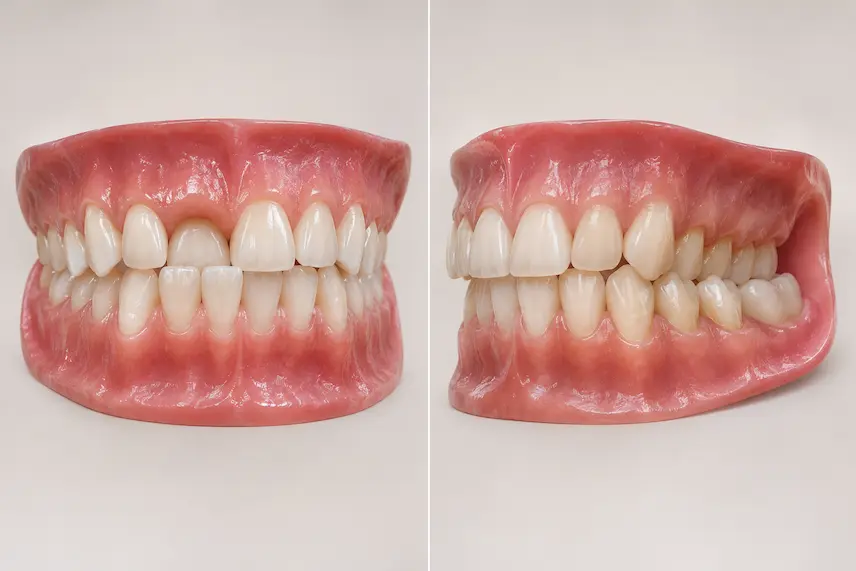
Dentists describe crossbites according to which teeth are affected and how the upper and lower teeth meet. Identifying the pattern helps determine whether the issue is primarily dental, skeletal, or functional.
Anterior crossbite: Front teeth
An anterior crossbite occurs when one or more upper front teeth bite behind the corresponding lower front teeth. It may involve a single incisor or several front teeth.
For example, an upper permanent incisor may erupt toward the tongue rather than into its expected position. If the surrounding jaw relationship is otherwise normal, the problem may be primarily related to that tooth’s position.
In other cases, several front teeth may be affected because of differences in how the upper and lower jaws have developed. This distinction is important because moving individual teeth and addressing an underlying jaw discrepancy are not equivalent treatments.
Posterior crossbite: Back teeth
A posterior crossbite affects the premolars or molars, the teeth used primarily for chewing. Typically, the affected upper back teeth sit farther toward the tongue than their opposing lower teeth.
A posterior crossbite may be:
- Unilateral: Visible on one side of the mouth.
- Bilateral: Present on both sides of the mouth.
- Limited to individual teeth: Caused by the positioning or inclination of particular teeth.
Sometimes a crossbite that appears on only one side develops because the lower jaw shifts sideways as the person closes their mouth. This is known as a functional shift. The clinician needs to distinguish the position of the teeth from the movement of the jaw itself.
Scissor bite: A less common back-tooth relationship
A less common presentation occurs when the upper back teeth sit excessively far toward the cheeks, outside the lower teeth. This is often described as a scissor bite; some clinical classifications use terms such as buccal crossbite or Brodie bite for particular patterns.
Because the opposing teeth may not contact normally, this presentation can affect chewing efficiency. It requires an assessment different from that of a typical posterior crossbite.
What Causes Crossbite Teeth?
Crossbites do not have a single cause. Some develop because individual teeth erupt out of position, while others reflect differences in jaw width, growth or alignment.
Differences in jaw development
The upper jaw may be relatively narrow compared with the lower jaw, contributing to a posterior crossbite. Differences in the forward growth or position of the jaws can also contribute to anterior bite discrepancies.
Inherited growth patterns can influence these relationships, although genetics alone does not explain every case.
Tooth eruption and available space
Permanent teeth do not always emerge into their expected positions. Crowding, differences in eruption direction, or the early or delayed loss of primary teeth can affect how neighbouring teeth fit together.
A crossbite involving one tooth may therefore have a different cause from a crossbite involving an entire group of teeth.
Childhood oral habits
Prolonged thumb or finger sucking and certain other oral habits may influence dental alignment and jaw development, depending on their intensity, frequency and duration.
However, the presence of a childhood habit does not automatically establish the cause of a crossbite. A clinician must consider the full developmental picture.
Changes following injury or dental development
In some patients, previous dental injuries, altered tooth position or changes in the supporting structures may contribute to an abnormal bite.
Identifying the origin of a crossbite helps avoid choosing treatment based only on its visible appearance.
What Are the Signs and Symptoms of a Crossbite?
A crossbite may be present without pain or other obvious symptoms. Some patients notice an unusual tooth position, while others become aware of the problem during routine dental care.
Possible signs include:
- One or more upper teeth visibly sitting behind or inside the lower teeth.
- The lower jaw shifting sideways when closing the mouth.
- Difficulty bringing the teeth together comfortably.
- Uneven chewing contact or difficulty chewing on one side.
- Localized tooth wear or gum irritation near an affected tooth.
- Changes in the way the front teeth meet when biting.
These findings are not specific to crossbite. Tooth sensitivity, jaw discomfort, headaches and uneven tooth wear can have several possible causes. They should not be used as standalone diagnostic tests.
A person may also have a crossbite without experiencing any of these functional problems. For that reason, the absence of discomfort does not necessarily mean the tooth relationship is normal.
When Should a Crossbite Be Assessed?
Quick answer: A suspected crossbite should be assessed when it is noticed, particularly in a growing child or when the jaw shifts during closure. Earlier evaluation can help identify tooth or jaw-development problems. An assessment does not mean immediate treatment is necessary; the appropriate timing depends on the patient’s growth, oral health and specific bite relationship.
Crossbite in children
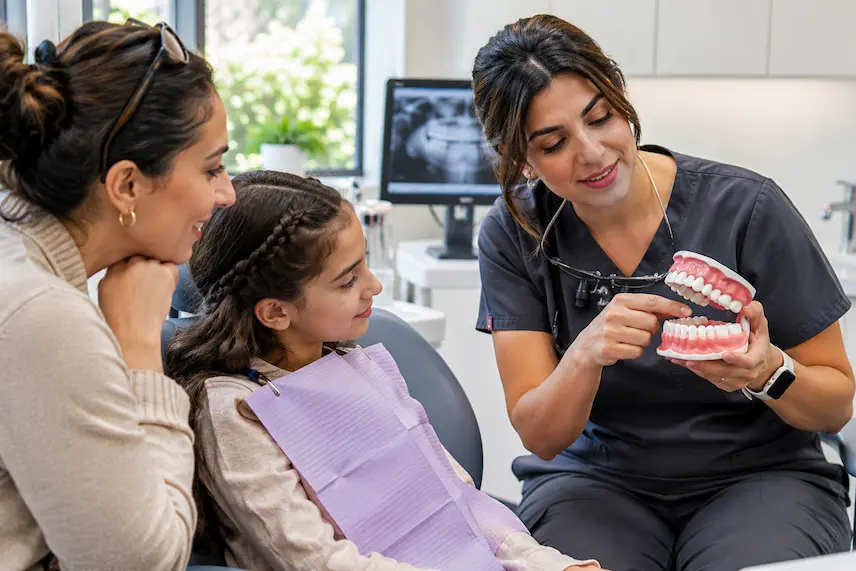
Children’s teeth and jaws change considerably as primary teeth are replaced by permanent teeth. This creates opportunities to recognize bite problems while growth is still occurring.
American Association of Orthodontists recommends an orthodontic evaluation by age seven
An orthodontic evaluation at this age does not mean that braces or other appliances will be recommended. Some children need only periodic monitoring, while others may benefit from early intervention for a specific problem.
A posterior crossbite associated with a functional jaw shift is one example where timely assessment is particularly relevant. During growth, repeated shifting may influence jaw positioning and development.
The American Academy of Pediatric Dentistry’s current guidance recognizes that crossbite management depends on its dental, skeletal and functional characteristics.
Crossbite in teenagers and adults
Crossbite correction is not limited to childhood. Teenagers and adults can also be assessed for orthodontic treatment, although the available options may differ after jaw growth is complete.
In adults, the clinician must consider established jaw relationships, tooth position, gum and bone support, existing restorations and overall dental health.
A crossbite caused mainly by the position of a few teeth may require a different approach from a substantial skeletal discrepancy. More complex adult cases may need assessment by an orthodontic specialist and, occasionally, other specialists.
When to seek more prompt dental attention
Arrange a dental examination if the bite has recently changed, teeth are becoming damaged, chewing is uncomfortable, or the jaw shifts noticeably during closure.
A sudden bite change after an injury, especially with significant pain, swelling, loose teeth or difficulty closing the mouth, warrants prompt professional assessment. These findings should not be assumed to result from an ordinary developmental crossbite.
How Does a Dentist Diagnose a Crossbite?
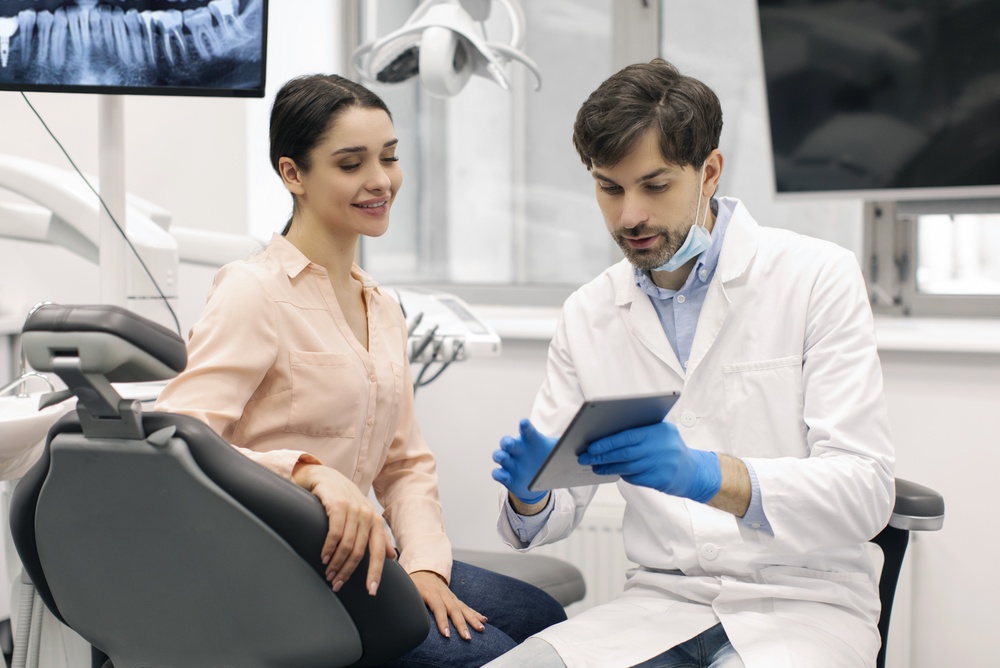
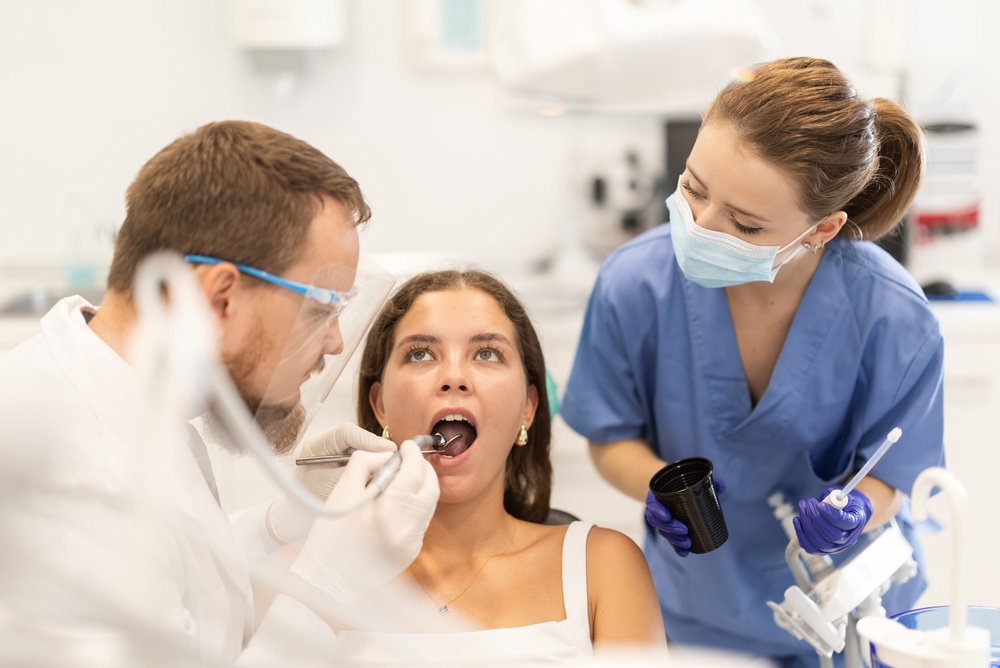
A crossbite diagnosis involves more than checking whether the teeth look straight. The clinician evaluates how the upper and lower teeth meet, how the jaw moves and whether the relationship reflects tooth position or the underlying jaw structures.
A clinical assessment may involve:
- Dental and medical history: Reviewing growth, previous orthodontic treatment, injuries, symptoms and relevant oral habits.
- Bite examination: Observing the teeth during closure and identifying affected teeth or areas.
- Jaw movement assessment: Checking whether the lower jaw shifts to achieve tooth contact.
- Oral health evaluation: Assessing gum health, tooth wear, crowding and existing dental restorations.
- Diagnostic records when indicated: Using photographs, digital scans, study models or appropriate radiographs to investigate tooth and jaw relationships.
Not every patient needs every diagnostic record. The choice depends on the clinical findings and whether the information would help guide treatment decisions. For an overview of professional treatment approaches, see Artis Dental Centre’s orthodontics service information.
Dental, skeletal and functional crossbite
One of the most important diagnostic distinctions is identifying the source of the bite discrepancy.
| Classification | Primary issue | Why it matters |
|---|---|---|
| Dental | The position or inclination of one or more teeth. | Tooth movement may address the discrepancy when clinically appropriate. |
| Skeletal | A difference in jaw size, width or position. | Jaw growth, maturity and severity influence treatment options. |
| Functional | The lower jaw shifts to obtain a more comfortable bite. | The shift must be evaluated alongside the underlying tooth and jaw relationship. |
These classifications can overlap. A patient may have both dental and skeletal components, and a functional shift can occur alongside either.
Does Every Crossbite Need Treatment?
Not every crossbite requires immediate correction. The decision depends on its severity, cause, progression and effects on oral health or function.
A clinician may recommend monitoring when the condition is limited, stable and not causing identifiable harm. Treatment may be more strongly considered when there is a functional jaw shift, significant tooth interference, progressive wear, periodontal concerns or an unfavourable developing jaw relationship.
Leaving a clinically significant crossbite untreated can sometimes contribute to ongoing tooth wear, functional problems or asymmetric growth in children. However, these outcomes are not inevitable for every patient.
The purpose of evaluation is to identify which risks apply to the individual, rather than assuming that every visible crossbite will lead to complications.
What Treatment Options Can Correct a Crossbite?
Quick answer: Crossbite correction may involve braces, clear aligners, expansion appliances or, in selected severe adult skeletal cases, a combination of orthodontic treatment and jaw surgery. The appropriate option depends on whether the problem involves teeth, jaw structure or both, as well as age, growth, periodontal health and overall complexity. Not every crossbite is suitable for the same appliance.
Braces and other fixed orthodontic appliances
Braces use brackets and wires to apply controlled forces that gradually reposition teeth. They may be considered for some dental crossbites, including cases involving multiple teeth or more complex alignment requirements.
Depending on the diagnosis, other fixed appliances or specialized orthodontic mechanics may also be used. The treatment plan must account for how correcting one tooth affects contact with the opposing teeth.
Clear aligners
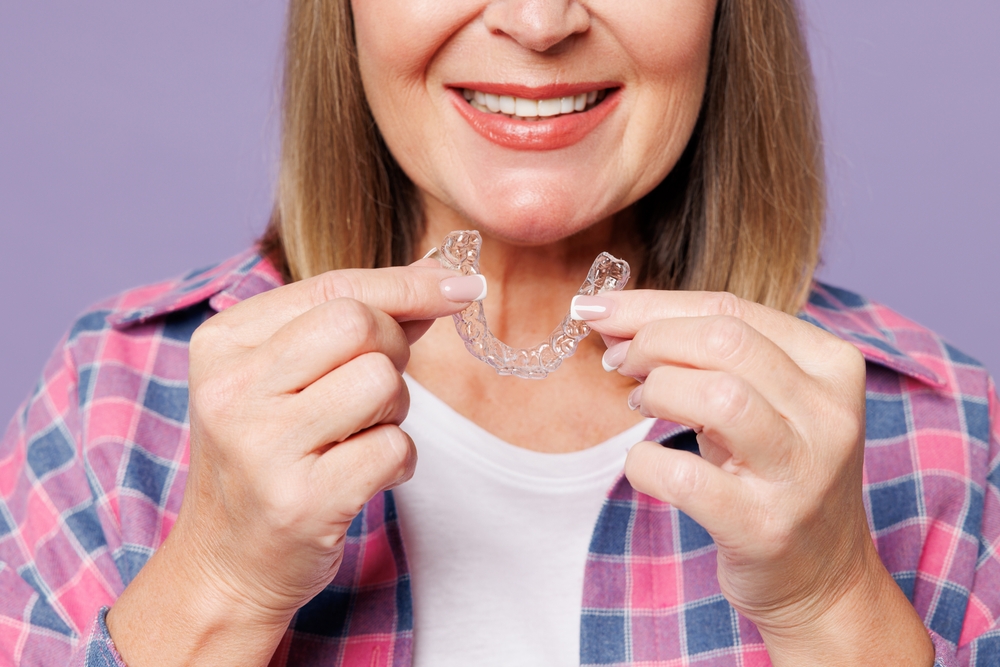
Clear aligners are removable, custom-made appliances designed to move teeth through a planned sequence. Some crossbites involving tooth-position discrepancies may be suitable for aligner treatment.
However, clear aligners cannot be assumed to correct every crossbite, particularly when substantial skeletal changes are required. Their suitability depends on the movements needed, the available space, tooth and gum health, and the patient’s ability to follow the prescribed wear schedule.
Artis Dental Centre provides information about its Invisalign treatment service, but an individual evaluation is necessary to determine whether this option is appropriate for a particular crossbite.
Palatal expansion in growing patients
When a posterior crossbite involves a narrow upper dental arch or maxilla, an orthodontic professional may consider an expansion appliance.
The upper jaw is called the maxilla, and the palate forms the roof of the mouth. Expansion treatment aims to address inadequate width using an appliance selected for the patient’s anatomy and developmental stage.
There are several appliance designs, and the choice depends on the specific discrepancy. A 2021 Cochrane systematic review of posterior crossbite treatment found that fixed and removable expansion appliances can improve posterior crossbite correction in children. Evidence comparing some appliance designs and treatment approaches remains limited.
Expansion is not appropriate for every crossbite, and the methods used in growing patients cannot automatically be applied to adults.
Combined orthodontic and surgical treatment
Some adults have substantial skeletal discrepancies that cannot be adequately addressed through tooth movement alone. In selected cases, orthodontic treatment may be combined with orthognathic surgery, which changes the position of the jaw bones.
This is a specialist-led treatment pathway that requires careful diagnosis, discussion of alternatives, and consideration of surgical risks and recovery.
It is not the usual starting point for a minor crossbite involving one tooth.
What Factors Determine Whether Crossbite Correction Is Suitable?
The same visible crossbite can lead to different treatment recommendations for different patients. Before deciding on a correction method, the clinician considers several factors:
- Age and growth: Whether the jaws are still developing can influence treatment timing and appliance selection.
- Dental or skeletal origin: A tooth-position problem may be managed differently from a jaw-width or jaw-position discrepancy.
- Number and position of affected teeth: A single anterior crossbite may require a different approach from a bilateral posterior crossbite.
- Periodontal health: Gum inflammation, bone support and tooth mobility may affect the safety and timing of orthodontic movement.
- Existing restorations: Crowns, bridges, implants and other dental work may influence planning. Unlike natural teeth, dental implants cannot be repositioned through conventional orthodontic movement.
- Patient needs and treatment adherence: Removable appliances require consistent use, while some treatment approaches involve more complex maintenance or specialist care.
The clinician should also explain expected benefits, limitations, possible discomfort, alternatives and the consequences of choosing to monitor rather than treat.
Orthodontic tooth movement can involve temporary soreness, hygiene challenges and, in some patients, changes to gum support or tooth roots. These risks vary according to the treatment and individual circumstances.
There is no single reliable treatment timeline for all crossbites. Duration depends on the underlying problem, the extent of correction required and how the teeth respond.
Can You Prevent a Crossbite or Correct It at Home?
Not all crossbites can be prevented, particularly those influenced by inherited jaw relationships or natural tooth development.
Routine dental examinations can help identify changes in a child’s developing bite. Addressing persistent oral habits when appropriate and maintaining good oral health may also support healthy dental development, although these measures do not guarantee normal alignment.
Do not attempt to move teeth yourself using elastic bands, improvised appliances or unprescribed devices. Uncontrolled forces can damage teeth, roots and supporting tissues.
Brushing, flossing and healthy oral habits remain important, but they cannot reliably reposition an established crossbite. Professional assessment is needed to determine whether correction is indicated.
Understanding Your Next Step
A crossbite may involve a single misplaced tooth or a more complex relationship between the upper and lower jaws. The important question is not simply how the teeth look, but why they meet that way and whether the condition affects oral health, function or development.
If you have concerns about your bite or your child’s developing teeth, contact Artis Dental Centre in New Westminster to request a dental assessment and discuss whether further orthodontic evaluation is appropriate.
This article is intended for general dental education and does not replace an individual diagnosis or treatment recommendation from a qualified dental professional.